Current Disaster: Flooding April 2026

Incident Information
Date last updated: May 5th, 2026
Outagamie County is coordinating recovery information and public assistance resources following the recent disaster incident.
If you have a life-threatening emergency, call 911.
For non-emergency assistance and recovery information, use the resources on this page.
Federal Emergency Management Agency (FEMA) Process
Doesn’t FEMA give people money to help repair damage from storms?
FEMA help for homeowners and renters is only available if there is a federal disaster declaration that includes private property damage.
That kind of help is usually given only when uninsured damage is very high. Even then, FEMA help is usually meant to make a home safe to live in again. It does not usually cover all losses.
Federal help is for damage to a primary home that is not covered by insurance or was denied by insurance.
That is why it is so important to:
- take pictures
- document damage
- report damage to local emergency management officials
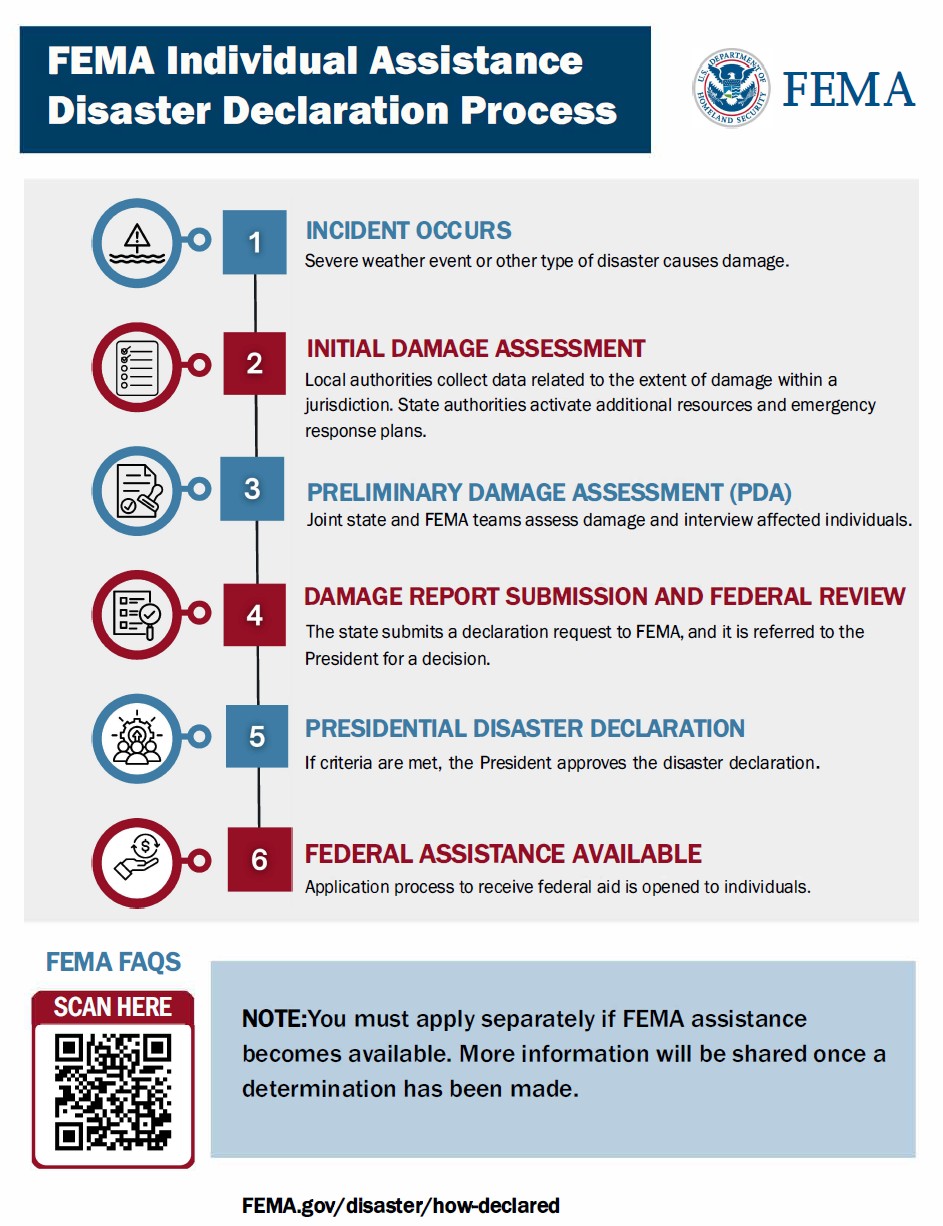
Those reports help the state decide whether to ask for federal help. This process can take months and is not meant to give immediate help.
What happens during the joint Preliminary Damage Assessment?
If the state decides the disaster is too large for the state to handle alone, the Governor may ask for a joint Preliminary Damage Assessment, also called a PDA.
During a PDA, federal, state, tribal, and local officials review damage information collected by counties and tribes. They look at how much damage happened and how the disaster affected people and communities.
After the PDA is done, the information is reviewed to decide whether the state should ask for a federal disaster declaration.
Are the numbers from the PDA the full amount of damage from the disaster?
No. The PDA numbers do not show all disaster damage.
They give an early picture, or snapshot, of how the disaster affected homes, communities, and infrastructure.
It’s been weeks since the storms and flooding happened. When will federal assistance be provided?
Federal help can take a long time, and there is no promise that it will be approved.
Before federal help can be given, the President must approve a disaster declaration.
After a request is sent in, there is no set deadline for when the federal government must answer.
If you need help or need to connect with services during recovery, contact 211 Wisconsin by calling 2-1-1 or reaching out online.
Why doesn’t FEMA go to every home when they are in an area doing field assessments?
The joint preliminary damage assessment gives a broad overview of damage and does not catalog every individual loss. During the joint field assessment, there was a virtual component and an in-person component. The virtual component involved a review of information collected by local and county officials detailing the type of damage that occurred. This information was collected by 211 Wisconsin or by an initial assessment team.
Some of the information collected during the initial assessment was verified through the desk review and did not need in-person verification.
The field assessment targets an area of homes to get a representative sample of the damage in that area. There is not a need to visit every home or speak to every homeowner during the initial and preliminary damage processes.
If someone’s home was not reviewed or they were not present during the preliminary damage assessment, this does not affect potential federal assistance eligibility.
If the homeowner has not done so, they should contact their insurance agent to learn if their damage is covered, and if so, by how much.
There are many homes damaged. Is there financial assistance available from the state to help make repairs?
The state of Wisconsin does not have a standing assistance program to help private property owners make repairs from flooding or storms. You should still report that damage to local officials and take pictures. That information will be given to Wisconsin Emergency Management (WEM) as it works to determine whether there is enough damage for Wisconsin to request federal assistance for those who suffered damage to their primary residence.
Even if available, federal assistance for homeowners, known as individual assistance, is not intended to cover all losses caused by a disaster. This program focuses on providing financial and direct services to individuals and households to meet their basic critical needs and help them get back on their feet after a disaster.
If the state seeks and receives a federal disaster declaration, information on Federal Emergency Management Agency (FEMA) Individual Assistance Programs would be provided by the federal government and the Wisconsin Department of Military Affairs Division of Emergency Management.
Should people wait for a disaster declaration to be made before making any repairs?
No, they do not need to wait for a federal disaster declaration to start home repairs, especially if they are urgent. It is important to document everything thoroughly by taking photos and videos, making a list of the damage, and keep all receipts of any repairs done to their home.
If they have insurance, they should file a claim immediately. People can make temporary repairs to protect the property from further damage, including cleaning up debris, but they should document everything thoroughly first. Keep receipts of what they paid for temporary repairs and include them in their insurance claim.
Permanent repairs must wait until the insurance adjuster has had a chance to assess the damage. An adjuster is a person professionally trained to assess the damage.
If it is necessary for you to move into a motel or apartment temporarily because of damage caused by a peril covered by your policy, your insurance company may pay reasonable and necessary additional living expenses. Your insurance company may also advance funds if you need to replace major household items to continue living in your home. The payments will be part of your final settlement.
Storm and Flood Recovery Questions
My home was damaged by storms or flooding. What do I do now?
First, call your insurance company to ask if the damage is covered. Take pictures and videos of all damage before you move or throw anything away. Take photos from different angles.
Make a list of damaged things in your home. This can include food that spoiled when the power was out for a long time. If you can, save small samples of damaged things like carpet, curtains, or furniture fabric.
Do not throw away damaged items unless your insurance adjuster says it is okay. If local officials say you must throw items away for safety, your pictures and samples will help.
Keep all receipts for cleanup and repairs. Also keep copies of repair estimates, even if you wait to do the work.
Stay safe. Do not go into floodwater. Do not enter a building until officials say it is safe. If you think there may be damage to gas lines or electrical wires, call your utility company before going inside.
How do I report damage to my property?
Watch for updates from your county, local, or tribal officials. They may ask people to report damage and will tell you how to do it.
If they tell you to report damage to 211 Wisconsin, you can call 2-1-1 or go online to report it.
Reporting damage helps local and state officials understand how bad the disaster is. This helps them plan recovery, ask for help, and send resources where they are needed most.
Reporting damage is important, but it does not replace filing an insurance claim.
Do I need to wait to make repairs or clean up damage?
You can make small temporary repairs to stop more damage, like putting on a tarp or cleaning up debris. But first, take pictures and document everything.
Keep receipts for what you spend on temporary repairs. You may need them for your insurance claim.
Wait to make permanent repairs until the insurance adjuster looks at the damage. An adjuster is a person trained to inspect damage.
If you need to stay in a motel or apartment for a short time because your home is damaged, your insurance may help pay for those extra costs. Your insurance company may also give you money early if you need to replace important household items. That money will count as part of your final claim payment.
A state of emergency was declared. What does that mean?
A state of emergency means the Governor of Wisconsin has said there is a serious disaster or danger of one. This lets the state move help and resources more quickly to protect people and property.
In Wisconsin, a state of emergency lasts up to 60 days unless the legislature extends it.
A state of emergency does not automatically mean:
- schools close
- businesses close
- travel is banned
- a curfew is in place
- people must evacuate
Those things would only happen if officials specifically say so.
My home is damaged. Is there financial assistance available from the state to help make repairs?
Wisconsin does not have a regular program that pays homeowners to fix storm or flood damage.
You should still report your damage to local officials and take pictures. That information helps Wisconsin Emergency Management decide if there is enough damage to ask for federal help.
If federal help becomes available, it usually does not pay for everything you lost. It is meant to help with basic needs and help people recover.
If a federal disaster is approved, information about FEMA help will be shared by the federal government and Wisconsin Emergency Management.
If you need help right away, contact 211 Wisconsin.
We have downed trees. What do we do with them?
Check with your local, county, or tribal government for cleanup information. Some communities offer brush pickup or places where you can drop off branches, leaves, and other yard waste.
If you have space on your property, you may be able to make a brush pile away from buildings. This can provide shelter for wildlife. Large hardwood pieces may also be cut and used as firewood.
If you plan to burn debris and your community allows it, be careful.
Before burning:
- Check burn permit rules and burn restrictions.
- Watch the weather. Do not burn on dry or windy days.
- Check fire danger in your county.
- Keep piles small.
- Clear grass and other burnable plants around the pile.
- Keep water and tools nearby.
- If the fire gets out of control, call 911 right away.
- Stay with the fire until it is fully out. Pour water on the ashes, stir them, and add more water.
Some local volunteer groups may also help with debris cleanup and flooded basements.
What do I do with leftover sandbags?
Sandbags that touched floodwater may be dirty or unsafe. Do not reuse them in places where people may touch them, like sandboxes, beaches, or school yards.
Ask local officials how to throw them away in your community. You may also be able to take them to a landfill or waste transfer site.
What do I do with flood-damage items?
Items like carpet, furniture, drywall, and other belongings that cannot be used after flooding should be thrown away at a landfill.
Check with local officials to learn about community drop-off sites or where to take the items.
I reported damage to the county, but nobody came to look at it yet. Why not?
First, make sure you reported the damage to the right place, such as 211 or your local emergency management office.
If you reported it, your information is still helpful. Local officials use those reports to understand how bad the disaster is.
Officials may not need to visit every home. Sometimes they can confirm damage by driving by and looking from the road. If they need more information later, they may contact you.
I own a small business or a farm. Is there any assistance available for me right now?
If state help is available for small businesses, it would likely be announced by the Governor’s Office or the Wisconsin Economic Development Corporation.
Business owners can also contact their local economic development office or chamber of commerce to ask about local help.
Farmers should contact their local Farm Service Agency (FSA) office to report damage and ask what programs may be available.
Returning Home Guidance
Impacts
Flooding
Flooding has occurred along the banks of the Wolf River, Embarrass River, and Bear Creek. There has been localize ponding in many municipalities throughout the county.
Waste Water Treatment Plant Impact
Waste water treatment plant in Nichols have been effected.
Evacuations
It is encourage that citizens of Shiocton and New London evacuate the area due to rising river levels. We remind everyone to take essential items from your homes including pets, prescriptions, important papers, purse (and wallets), and phones. American Red Cross shelters have been opened:
Transportation
Many county and municipal roadways have been impacted by flooding. If you come upon a flooded roadway, do not drive through it. You do not know how deep the water is and how stable the road is. DO NOT ignore barriers and signs restricting access through roads.
Report Damage
If your home, business, or agricultural property sustained damage, please complete the county damage report form.
To report damages: 211
Before you submit:
- Take clear photos of damage
- Document location and extent of damage
- Keep receipts for emergency repairs
- Save insurance information and claim details
Important
Submitting a damage report helps local and state officials understand impacts. It is not a guarantee of financial assistance and is not substitute for filing an insurance claim.
Who should report:
- Homeowners
- Renters
- Businesses
- Farms and agricultural operations
- Nonprofit organizations, where applicable
Cleanup, Debris, and Safety Guidance
Residents should contact their local municipality for guidance on proper sandbag disposal.
Recover Safely
Residents returning to damaged property should use caution.
Safety Reminders
- Watch for downed power lines
- Do not enter heavily damaged structures until they are safe
- Use generators outdoors only
- Wear gloves, boots, and respiratory protection during cleanup
- Photograph damage before major cleanup, if safe to do so
Debris removal guidance
- Separate vegetative debris, construction debris, and hazardous waste
- Place debris according to municipal or county guidance
Private well / Septic guidance
If your property uses a private well or septic system and was impacted by flooding or damage:
After Flood Safety
Personal Safety
- Go home only when local officials say it is safe.
- Do not drive unless you have an emergency.
- Wear gloves, boots, and clothes that cover your skin during cleanup.
- Wear a mask if you are cleaning mold or dirty debris.
- Children should not help with disaster cleanup.
- People with asthma, lung problems, or weak immune systems should stay our of buildings with water damage or mold you can see or smell.
General Safety
- Listen to local officials for updates and instructions.
- Stay out of floodwater. it may be dirty and dangerous.
- Floodwater can hide sharp objects, trash, and other harmful debris.
- Water may also have electricity in it from fallen or underground power lines.
- Watch for snakes and other animals that may have entered your area or home.
- Dump out any objects with standing water. These can be breeding grounds for mosquitos and other insects.
House Safety
- Be careful around electricity.
- Do not touch electrical equipment if it is wet or if you are standing in water.
- If it is safe, turn off the power to help prevent electrical shock.
- Use generators and other gas-powered machines only outside and away from windows.
Assistance
United Way 211
You can call United Way 211 for the following resources:
- Spill Clean-up Kits
- They can connect you with a representative from American Red Cross.
- Reporting Damages
- They can also connect you to volunteer groups to help clean your property
- Shelter/Utilities
- Mental Health & Addictions
- Government & Legal Aid
- Veteran/Military Services
- Transportation
- Food/Clothing
- Health Care
How to Help those Affected
Community members who want to help are encouraged to make monetary donations through the United Way Fox Cities and the Community Foundation for the Fox Valley Region Flood Response Fund.
Monetary donations provide the greatest flexibility to support immediate and long-term recovery needs.
A list of trusted donation locations is currently being compiled and will be shared as it becomes available. Locations currently accepting monetary donations include:
- New London Area Chamber of Commerce - donate at NewLondonChamber.com
- Friends of Shiocton-Bovina Fire Department - donations being accepted at Wolf River Bank
- St. John's United Church of Christ - Cecil, Shiocton, and Black Creek - donate at St. John's United Church of Christ donations website
Stay Connected
Navigate to municipal Facebook pages for information on evacuation, shelter, sandbagging, volunteering, road closure, and disaster information. All Facebook pages can be found in the Resource tab above.
Outagamie County Emergency Management Social Media
Emergency Management Facebook
Emergency Management Instagram
Municipal Facebook Pages
Village of Bear Creek
Village of Shiocton
City of New London
Oneida Nation
Grand Chute Town Hall
Grand Chute Public Works
City of Kaukauna
City of Appleton
City of Appleton Public Health Department
City of Appleton Public Works Department
City of Seymour
Village of Hortonville
Village of Little Chute
Village of Harrison
Village of Combined Locks
Village of Kimberly
Town of Buchanan
Town of Center
Town of Vandenbroek
Town of Freedom
Village of Greenville
Fire Department and Emergency Medical Services (EMS) Facebook Pages
Nichols Rural Fire Department
Shiocton-Bovina Fire Department
Greenville Fire and First Responders
Grand Chute Fire Department
City of Appleton Fire Department
Little Chute Fire Department
Town of Buchanan Fire and Rescue
Combined Locks Public Safety
Dale Fire & Rescue
Gold Cross Ambulance
Town of Center EMS
Police Department Facebook Pages
Outagamie County Sheriff's Department
City of Appleton Police Department
Kaukauna Police Department
Oneida Police Department
Grand Chute Police Department
Waupaca County Sheriff's Department
Fox Valley Metro Police Department
Hortonville Police Department
City of Seymour Police Department
Current Weather Information
NWS Radar